A crop can be short of nutrients even when they are present in the soil. Dry weather, temperature extremes, high soil pH and restricted root activity can all limit the amount a plant takes up. At other times, crop demand may simply exceed what the roots can supply.
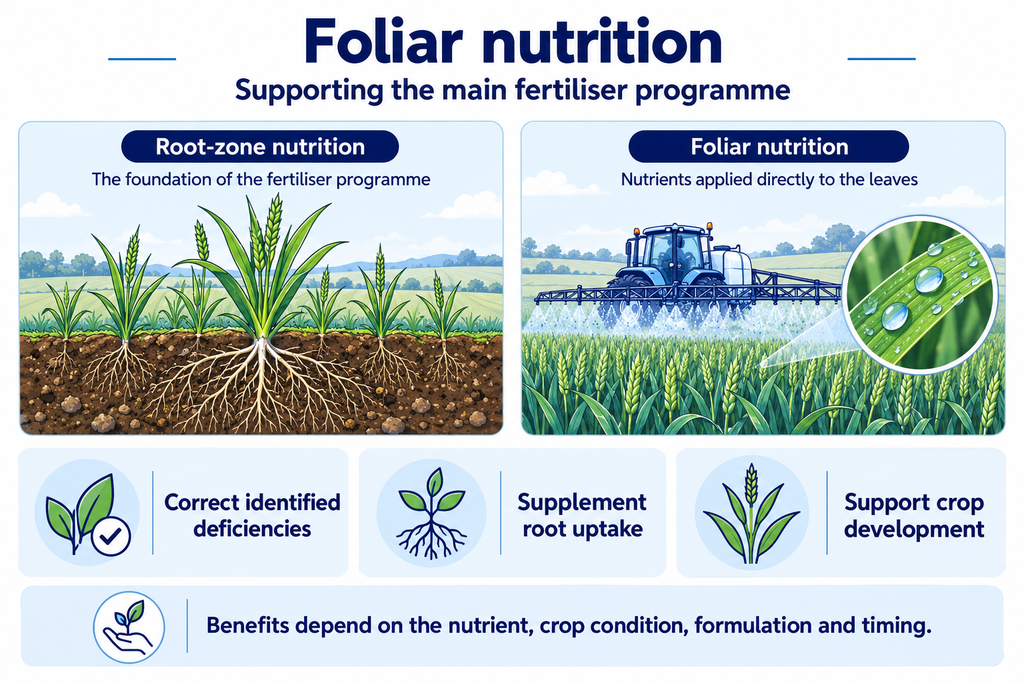
Foliar feeding applies nutrients directly to the leaves. It gives growers another way to address an identified shortfall during the growing season, particularly when a quick response is needed.
Recognising a nutrient shortfall
Signs of a possible nutrient deficiency include:
- Reduced plant height, stunted growth or less vegetative development
- Leaf discolouration, including yellowing or uneven greening
These symptoms are a starting point, rather than a diagnosis. Field observations, crop performance and, where appropriate, soil or tissue analysis can help establish which nutrient is lacking and whether an application is justified.
Where foliar feeding can help
Foliar nutrition is particularly useful for nutrients needed in small quantities, using formulations suitable for uptake through the leaf. It can complement soil fertiliser and fertigation programmes when nutrients are temporarily unavailable or root uptake is restricted.
For practical crop management, foliar nutrition should be viewed as a supplemental strategy rather than a full replacement for root-zone fertilisation.
Used at the right time, it can help growers:
- Correct identified deficiencies promptly
- Supplement nutrient supply when crop demand exceeds root uptake
- Support root activity and crop development, and help protect quality and marketable yield where nutrient supply is limiting
These benefits depend on the nutrient, crop condition, formulation and application timing.
Making the economics work
Where poor root uptake or nutrient lock-up limits the response to soil fertiliser, a targeted foliar application may be a more economical way to correct a shortfall than another broad soil application. It may also improve nutrient use and reduce losses, depending on the nutrient source and growing conditions.
A timely application can help protect yield and quality. Even small improvements in grade, uniformity or marketable yield may have worthwhile financial value, but the return depends on the severity of the deficiency, application timing, crop value, and product and application costs. Combining a foliar feed with an existing spray pass may also save time, labour, fuel and machinery costs.
Where NUE28 fits with foliar nutrition
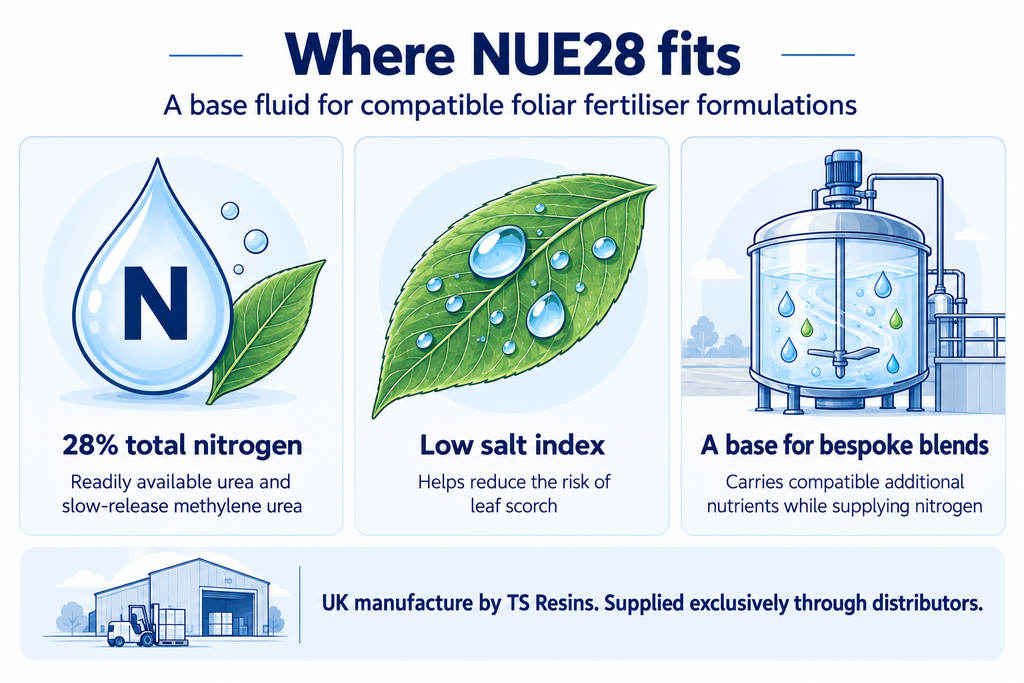
Manufactured in the UK by TS Resins, NUE28™ contains 28% total nitrogen, combining readily available urea with slow-release methylene urea to supplement the main fertiliser programme.
NUE28 also provides a suitable base fluid for compatible foliar fertiliser formulations. Its low salt index helps reduce the risk of leaf scorch, making it a useful carrier for additional nutrients while supplying nitrogen at the same time.
TS Resins works with distributor partners to develop bespoke NUE28-based blends for particular crop needs. NUE28 and these formulations are supplied exclusively through distributors.
Applications should follow product guidance and agronomic advice, taking account of crop condition and weather.